
esc

↑↓ navigate↵ open

An editorial illustration of connected decision landscapes under changing context.

Machine Learning & Optimization · Georgia Tech · Los Alamos · UC Berkeley

Andrew Rosemberg

I work at the intersection of machine learning and mathematical optimization, developing methods for reliable, effective, and computationally efficient decision-making under uncertainty.

I take this research all the way to working software for real decisions: three years of daily bidding models across seven US electricity markets, planning and contracting models for Brazilian utilities, open-source tools used by the optimization community, and policy distillation for humanoid robots.

My research centers on the relationship between representations, decision policies, and computation. I study how policies and solution maps can be learned, approximated, and integrated with mathematical decision methods, exploiting information across problem instances while retaining the ability to adapt to individual circumstances. A central concern is how these choices affect generalization, decision quality, and the computational resources required to achieve them.

This perspective extends to decisions made under incomplete information, uncertainty estimated from data, and interactions with other agents. I investigate these questions through mathematical analysis, learning algorithms, and open-source computational tools.

  • Context-conditioned policies
  • Multi-level decision processes
  • Uncertainty and ambiguity
  • 7 US power marketsDaily bidding models, Invenia Labs 2020–23
  • Brazilian utilitiesEnergisa Group and FGV Energia projects
  • NeurIPS 2026Main track, masked Sobolev training
  • LearningToOptimizeLead of the open-source organization

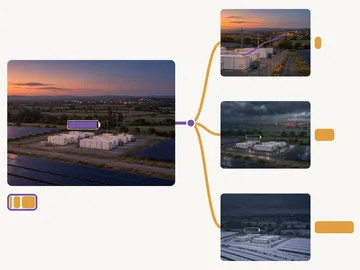
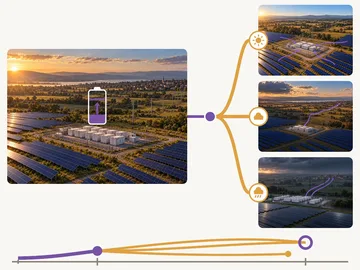
Repeated computation creates an opportunity to learn structure across context, without treating every instance as an unrelated problem.

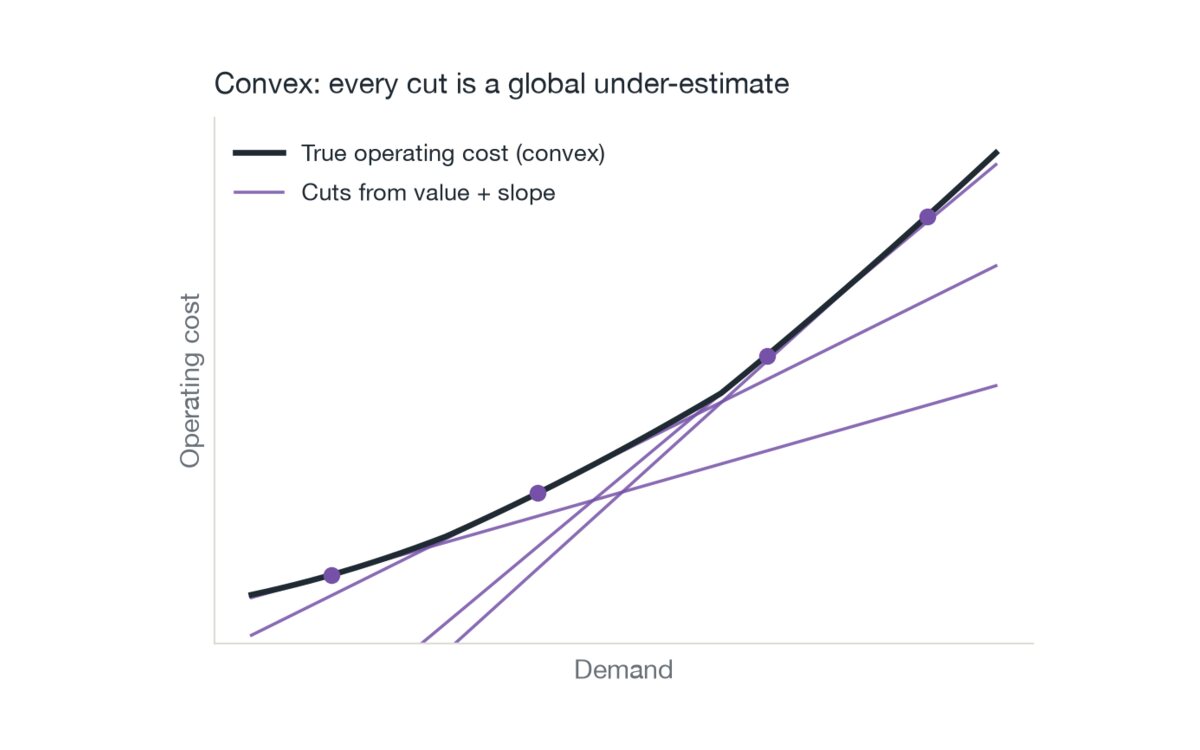
A parametric procedure induces a map from context to decisions. Learning that map amortizes the cost of repeated solution, but transfers the burden of generalization from the procedure to its representation. The relevant approximation must retain the local structure that governs decisions in new contexts and the response required when it becomes one component of a larger system.

In practice Fast learned proxies for power-flow and dispatch problems that stay feasible, the subject of the NeurIPS 2026 paper.

Learning Solution Maps
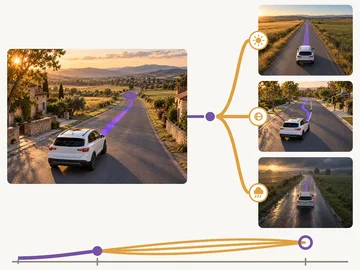
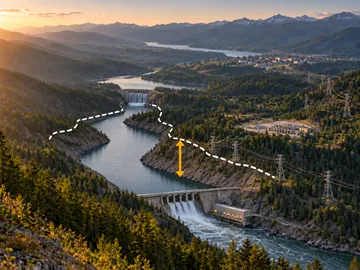
When decisions alter the context of later decisions, computation must be allocated across time rather than repeated myopically.

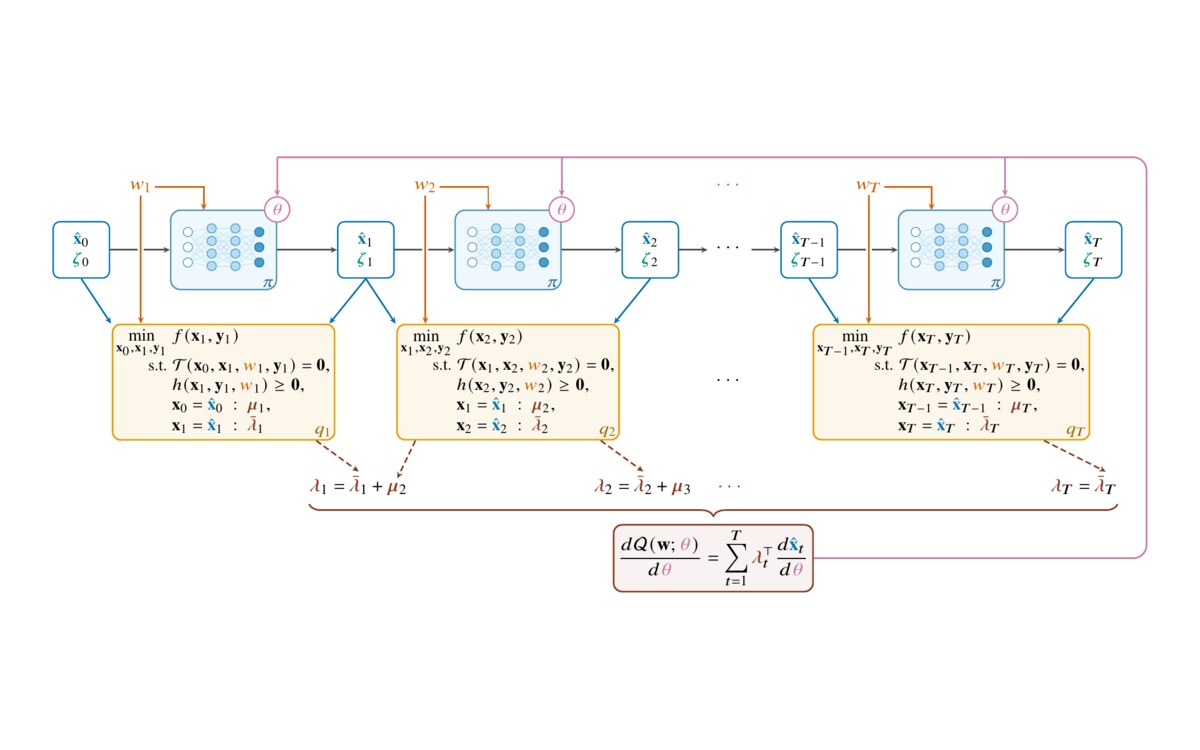
A policy is a solution map evaluated along the trajectory it creates. Its representation determines what is prescribed in advance, what is computed after new information arrives, and how future consequences enter the current decision. Appropriate reformulation can expose separability, preserve prior structure, and make reliable policy learning compatible with parallel computation.

In practice Multistage operating policies for hydrothermal systems and power grids, and humanoid control policies distilled from task-specific experts.

Policies for Multistage Decisions Continuation-Value Representations Planning and Realization Mismatch

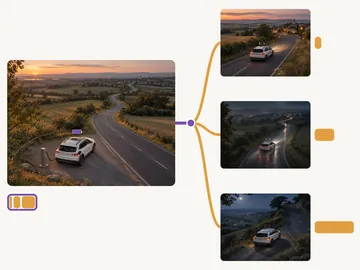
A decision is often evaluated through a mechanism whose response is itself part of the problem.

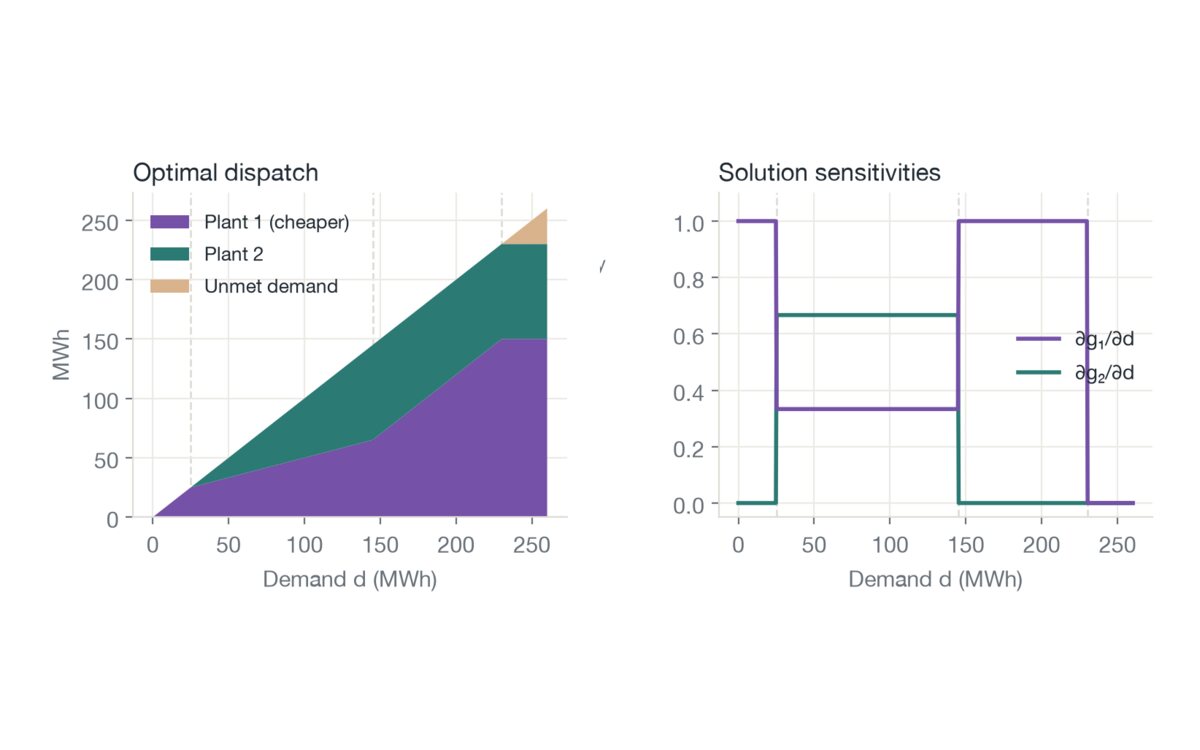
Parameters can be interpreted by a model, targets can be realized by a downstream process, and the outcome of one decision can depend on the response of others. These systems are coupled even when their component objectives differ. The relevant learning signal is determined by the response of the composite decision process, not by any learned component in isolation.

In practice Strategic bidding through electricity-market clearing, and learned corrections that turn simplified DC grid decisions into feasible AC operating points.

Differentiating Optimization Models Endogenous Response Learned Model Correction

Data provide evidence about future context; they do not identify the law on which a policy is conditioned.

Selection against an estimated model favors decisions whose apparent performance is helped by estimation error. Ambiguity is therefore a property of the conditional law used to construct a policy, not merely a perturbation of its eventual outcome. The research studies data-informed uncertainty sets and the consequences of mismatch between the model used for a decision and the mechanism that realizes it.

In practice Robust bidding and portfolio decisions when price distributions must be estimated from data.

Uncertainty and Ambiguity

Selected papers

All publications
  1. ConferenceNeurIPS 2026 · Advances in Neural Information Processing Systems, main track

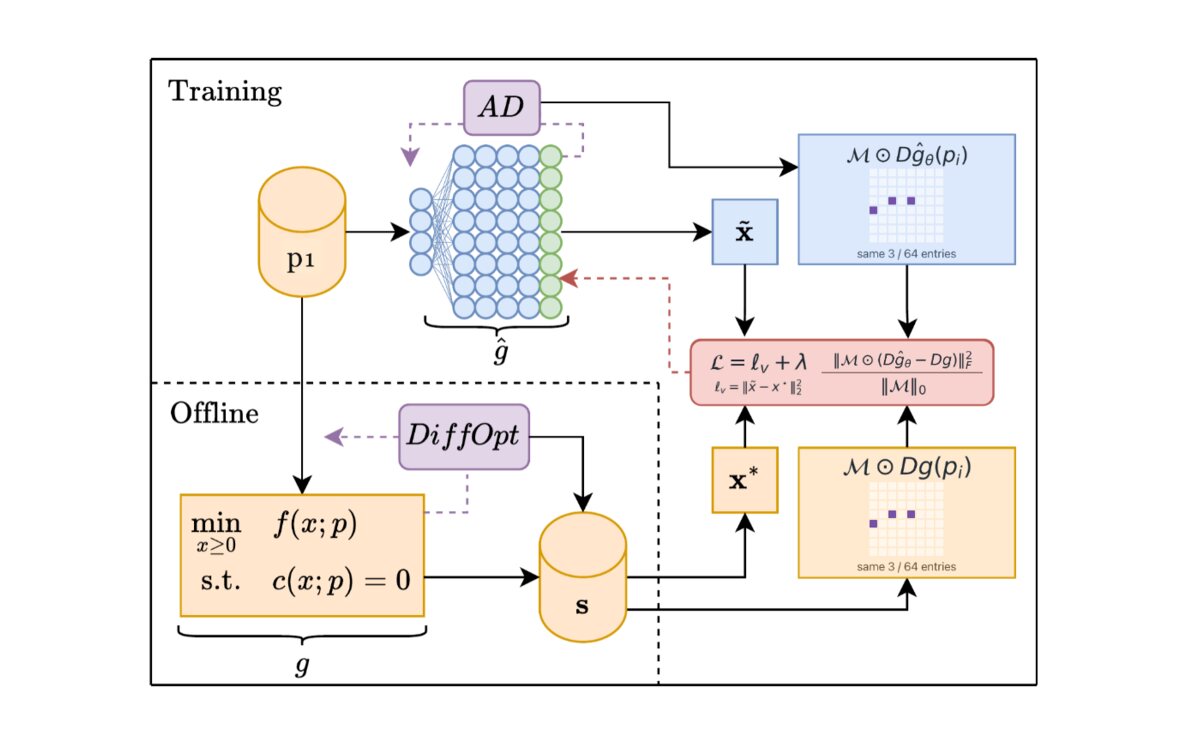
    Masked Sobolev Training for Feasibility-Reliable Optimization Proxies

    Andrew W. Rosemberg, Joaquim Dias Garcia, Russell Bent, Pascal Van Hentenryck

    Earlier preprint: Sobolev Training of End-to-End Optimization Proxies (arXiv, 2025).

  2. PreprintarXiv:2510.25986 · DiffOpt.jl

    A General and Streamlined Differentiable Optimization Framework

    Andrew W. Rosemberg, Joaquim Dias Garcia, François Pacaud, Robert B. Parker, Benoît Legat, Kaarthik Sundar, Russell Bent, Pascal Van Hentenryck

  3. WorkshopNeurIPS 2025 ML×OR workshop · arXiv:2405.14973

    Efficiently Training Deep-Learning Parametric Policies using Lagrangian Duality

    Andrew W. Rosemberg, Alexandre Street, Davi M. Valladão, Pascal Van Hentenryck

    Workshop title: Training Deep-Parametric Policies Using Lagrangian Duality. An extended journal version with new storage studies is in preparation.

  4. JournalElectric Power Systems Research, vol. 235, 110643 · presented at PSCC 2024

    Learning Optimal Power Flow Value Functions with Input-Convex Neural Networks

    Andrew W. Rosemberg, Mathieu Tanneau, Bruno Fanzeres, Joaquim Dias Garcia, Pascal Van Hentenryck

News

  1. Masked Sobolev Training for Feasibility-Reliable Optimization Proxies accepted to the NeurIPS 2026 main track.

  2. Completed a six-month visit to Pieter Abbeel’s Robot Learning Lab at UC Berkeley, working on policy learning and distillation for humanoid locomotion and dexterous manipulation.

  3. Two papers at the NeurIPS 2025 ML×OR workshop: two-stage deep decision rules and DC2AC.

  4. New preprint, A General and Streamlined Differentiable Optimization Framework, describing solution sensitivities for nonconvex programs, now in DiffOpt.jl.

  5. ISyE 8803, Special Topics on Optimal Control and Learning, a student-led PhD course at Georgia Tech designed with Michael Klamkin, connects mathematical programming, optimal control and reinforcement learning.

  6. Strategic bidding with gradient-based methods presented at IREP 2025 and published in Sustainable Energy, Grids and Networks.

  7. Joined Los Alamos National Laboratory as a graduate researcher, working on solution sensitivities of optimization models and their use in learning.

  8. Input-convex value functions presented at PSCC 2024 in Paris.

  1. Graduate Visiting Researcher

    Robot Learning Lab, UC Berkeley · with Pieter Abbeel

    Policy learning and distillation for humanoid locomotion and dexterous manipulation.

  2. Graduate Researcher

    Los Alamos National Laboratory

    Decision models inside learning pipelines: Solution sensitivities of nonconvex programs, sensitivity-supervised proxies, and strategic bidding through AC market clearing.

  3. Graduate Researcher

    AI4OPT, Georgia Tech

    Lead of the LearningToOptimize open-source organization and co-designer of the PhD course ISyE 8803. Policy learning for constrained sequential decisions, learned value functions, and calibration of simplified decision models.

  4. Researcher

    Invenia Labs, Cambridge, UK

    Directed projects on daily bidding in seven US electricity markets (MISO, PJM, ERCOT, CAISO, SPP, ISO-NE, NYISO), with risk-aware decision models built on machine-learning estimates of price uncertainty.

  5. Research Staff Member

    LAMPS, PUC-Rio · consulting projects

    Transmission-contracting models for Energisa Group and multistage hydrothermal planning software for FGV Energia.